
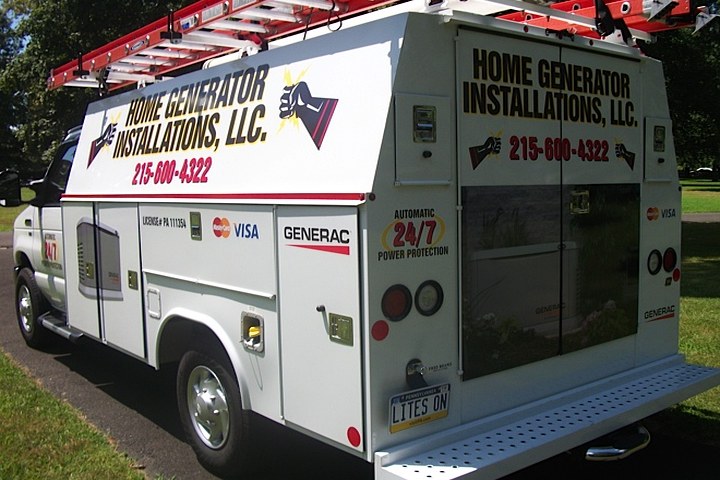
Across Bucks and Montgomery Counties, overhead utility distribution lines run through dense corridors of mature oak, maple, and ash trees. When high winds, summer thunderstorms, or winter ice storms snap primary conductors, homeowners quickly discover whether their backup power system was engineered properly or merely pieced together.
Routine mechanical and electrical calibration is what separates a standby generator that starts effortlessly during a sub-zero January blackout from one that hunts, surges, or shuts down on an overspeed/undervoltage fault. This technical tuning manual explains Complete 200-Hour / 2-Year Major Service & Mechanical Calibration Protocol for Home Generators specifically for Generac Protector 27kW–48kW Liquid-Cooled Systems, targeting a calibration specification of Valve Lash, Spark Plugs, Sediment Trap & Load Test using Full Electrical Torque & Thermal Camera Scan at a recommended service interval of Bi-Annual Deep Maintenance.
Why Precision Calibration Matters on Generac Protector 27kW–48kW Liquid-Cooled Systems
Unlike an automobile engine that warms up gradually before highway driving, a residential standby generator must accelerate immediately to 3,600 RPM (or 1,800 RPM on liquid-cooled units) and hold an exact 60.0 Hz electrical frequency while large inductive house loads cycle on and off. Over time, thermal cycling, valve seat seating, spark plug electrode erosion, and regulator diaphragm aging shift the engine's mechanical baseline:
- Target Equipment Family: Generac Protector 27kW–48kW Liquid-Cooled Systems
- Primary Calibration Specification: Valve Lash, Spark Plugs, Sediment Trap & Load Test
- Standard Calibration Method: Full Electrical Torque & Thermal Camera Scan
- Recommended Service Interval: Bi-Annual Deep Maintenance
Step-by-Step Tuning & Preventive Maintenance Procedure
- Lockout/Tagout & Cold Engine Preparation: Switch the generator controller to OFF, turn the main line circuit breaker (MLCB) OFF, and disconnect the negative battery cable when performing internal mechanical adjustments. Note that valve lash and spark plug adjustments must always be performed on a completely cold engine (ambient temperature).
- Crankcase Oil, Filter & Air Element Service: Drain used crankcase oil via the flexible drain hose, spin on a new OEM oil filter with a light film of clean oil on the rubber gasket, and refill to the full crosshatch mark with API SN/SP 5W-30 full synthetic engine oil. Inspect and replace the pleated air filter element and clean the crankcase breather tube.
- Executing Full Electrical Torque & Thermal Camera Scan: Using calibrated feeler gauges, a digital manometer, and a true-RMS frequency/voltage meter, adjust the system to Valve Lash, Spark Plugs, Sediment Trap & Load Test. When adjusting rocker arm jam nuts or regulator mixture screws, make incremental adjustments and re-verify measurements after tightening locknuts to factory torque.
- Battery Conductance, Charging & Terminal Maintenance: Clean lead battery posts, verify 13.4V–14.2V DC float charger output from the controller, and confirm the cold-weather battery pad warmer and oil filter heater circuits are intact before winter.
- Dynamic Load & Harmonic Verification: Reconnect the battery, place the unit in Manual mode to check no-load voltage (240V–242V AC) and frequency (60.0 Hz), then switch to Auto and simulate a utility blackout to verify smooth transfer, stable fuel pressure under HVAC startup surge, and <5% Total Harmonic Distortion (THD).
Calibration & Maintenance Specification Sheet (Generac Protector 27kW–48kW Liquid-Cooled Systems)
| Maintenance / Tuning Item | Factory Target Specification | Service Interval |
|---|---|---|
| Primary Calibration Target | Valve Lash, Spark Plugs, Sediment Trap & Load Test | Bi-Annual Deep Maintenance |
| Calibration Method | Full Electrical Torque & Thermal Camera Scan | Verified during annual tune-up |
| Engine Oil & Viscosity | Full Synthetic 5W-30 (Year-Round PA Climate) | Every 100–200 Hours or Annually |
| Spark Plug Gap & Torque | 0.020"–0.030" (Model Specific) @ 18 ft-lbs | Every 200 Hours or 2 Years |
| No-Load / Full-Load Frequency | 60.0 Hz No-Load / 58.8–59.5 Hz Full Load | Checked at every service visit |
Field Contractor Note from Stephen O'Donnell (39+ Years Experience)
In our field inspections across Bucks and Montgomery Counties, the single most overlooked factor is dynamic fuel pressure under full electrical load. Static pressure at a gas meter test port may read a healthy 7.0 inches of water column (W.C.) with the generator off, yet plunge below 3.5 inches W.C. the instant a 4-ton central air conditioner kicks on alongside a gas furnace.
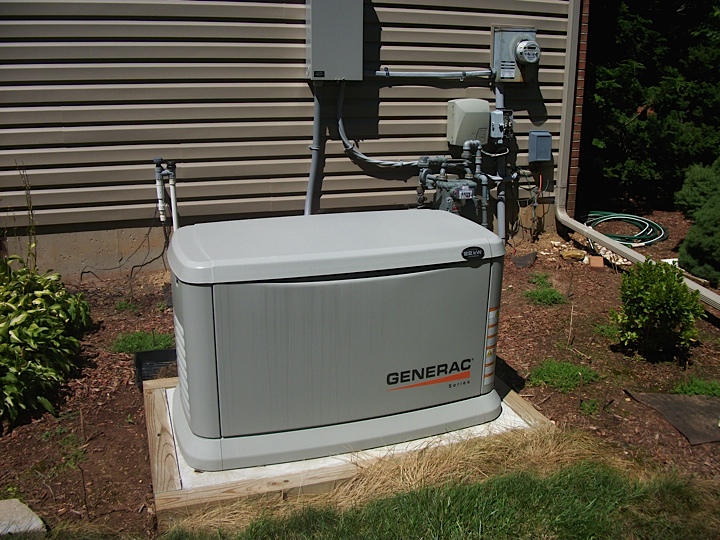
Pre-Storm Readiness & Safety Checklist for Homeowners
Whether you already own a standby generator or are planning a new installation in Feasterville-Trevose, Newtown, Doylestown, Bensalem, Warminster, Abington, Horsham, or surrounding Pennsylvania communities, follow these core field guidelines:
- Verify Clearances Year-Round: Keep shrubs, mulch, patio furniture, and winter snow drifts at least 36 inches away from the front and sides of your generator enclosure so cooling air can flow freely.
- Never Ignore a Yellow or Red Status Light: A yellow maintenance light indicates a scheduled oil/filter interval is due; a flashing or solid red light indicates a latching fault code that prevents automatic startup during a blackout.
- Test Under Real Load Annually: A 5-minute unloaded exercise proves the engine starts, but an annual supervised transfer test verifies the Automatic Transfer Switch contactor, load-shedding relays, and dynamic gas regulator pressure under real household amperage.
- Work With a Dual Electric & Gas Utility Specialist: Always make sure your installer is licensed in Pennsylvania (#PA 111354) and experienced in both NEC Article 702 electrical distribution and NFPA 54 gas piping.
Need Professional Generator Installation, Tuning, or Repair in Bucks or Montgomery County?
With over 39+ years in the electric and gas business, Home Generator Installations, LLC is your #1 choice for turnkey Generac whole-house standby generators, Automatic Transfer Switches, gas line sizing, and maintenance.