
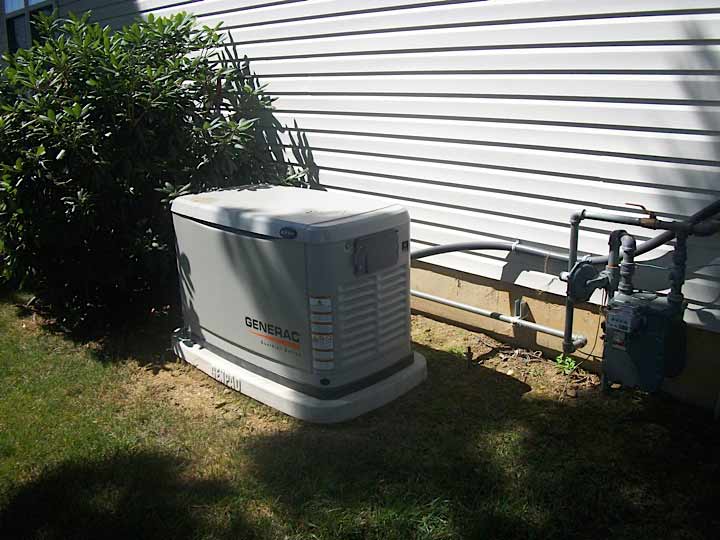
Selecting the right kilowatt (kW) capacity for a whole-house standby generator is one of the most important engineering decisions you will make for your property. Choose a generator that is too small without proper load management, and starting a 4-ton central air conditioner while an electric oven or submersible well pump is running can overload the alternator. Oversize the system unnecessarily without evaluating your real peak demand, and you may spend thousands more on equipment and fuel piping than your household actually requires.
Below is our field-tested 5-Step Generator Sizing Process used by Home Generator Installations, LLC across Bucks and Montgomery Counties.
Step 1: Evaluate Your Home's Square Footage & Central A/C Tonnage
Your home's heated square footage and central air conditioning condenser size provide a reliable baseline for preliminary sizing:
- Up to 1,500 sq. ft. with a 2-to-3-ton A/C: A 10kW to 14kW standby generator paired with an essential-circuit or managed transfer switch easily handles heating, refrigeration, sump pump, lighting, and cooling.
- 1,500 to 3,000 sq. ft. with a 3-to-4-ton A/C: A 14kW to 18kW standby system covers priority circuits, while an 18kW to 22kW system with a 200-amp service-rated Automatic Transfer Switch provides managed whole-house backup.
- 3,000 to 4,500+ sq. ft. with a 4-to-5-ton A/C (or dual zones): A 22kW, 24kW, or 26kW Generac Guardian air-cooled generator (or a 27kW–48kW liquid-cooled unit for 400A estates) delivers complete whole-house coverage.
Step 2: Decide What You Want Your Generator to Power
Homeowners generally fall into two backup power strategies: Essential Priority Coverage or Full Whole-House Coverage. Even when backing up the entire main breaker panel, understanding which heavy appliances drive peak wattage is essential:
- Critical Life-Safety & Property Protection Loads: Gas or oil furnace blower (600–1,200W), basement sump pump (800–1,500W running / 2,200–3,500W starting), 240V submersible well pump (1,200–2,500W running / 3,600–6,000W starting), refrigerator and deep freezer (700–1,200W combined), medical devices, garage doors, and LED lighting circuits.
- High-Amperage 240-Volt Comfort & Cooking Loads: Central air conditioning (3,500–6,000W running / 12,000–22,000W starting surge), electric range/stovetop (4,000–8,500W), electric clothes dryer (5,000–5,600W), electric tank water heater (4,500W), and Level 2 EV chargers (7,200–11,500W).
Contractor Pro Tip: Electric stovetops, ovens, and electric water heaters consume purely resistive power (watts = volts × amps with no motor surge), but they draw heavy continuous current—often three to four times more than a 1,300-watt microwave. By placing high-wattage resistive appliances on Generac Smart Management Modules (SMMs), a 22kW or 24kW generator can power your entire house by momentarily pausing the water heater or EV charger only when peak cooking and cooling loads coincide.
Step 3: Calculate Starting Wattage (Motor Surge / Locked Rotor Amps)
Inductive electric motors—such as air conditioning compressors, heat pumps, well pumps, and sump pumps—require 3 to 5 times more power for the first half-second of startup than they require once spinning. On your outdoor A/C condenser data plate, this is listed as LRA (Locked Rotor Amps).
For example, a 4-ton central air conditioner may draw only 18 amps (4,320 watts) while running, but require 85 to 105 amps of inrush current to start the compressor against head pressure. During our free on-site estimate, we inspect the exact LRA rating on your HVAC equipment to verify the generator's instantaneous kVA surge capability.
Step 4: Add a 15% to 25% Reserve Safety Margin
Never size a generator to run at 100% of its nameplate rating continuously. Operating any gas or propane engine at maximum capacity for days on end increases fuel consumption, raises oil temperatures, and leaves zero headroom for motor starting surges. Adding a 15% to 25% reserve margin above your calculated running load protects the alternator, extends engine life, and gives your family room for future electrical additions (such as a finished basement, a second freezer, or home medical equipment).
Step 5: Round Up to the Next High-Efficiency Standby Tier
Because price differences between adjacent air-cooled generator capacities (for example, stepping up from an 18kW unit to a 22kW unit, or from a 22kW to a 24kW unit) are relatively modest compared to the overall installation labor, rounding up to the next capacity tier is almost always the smartest long-term value.
Pre-Storm Readiness & Safety Checklist for Homeowners
Whether you already own a standby generator or are planning a new installation in Feasterville-Trevose, Newtown, Doylestown, Bensalem, Warminster, Abington, Horsham, or surrounding Pennsylvania communities, follow these core field guidelines:
- Verify Clearances Year-Round: Keep shrubs, mulch, patio furniture, and winter snow drifts at least 36 inches away from the front and sides of your generator enclosure so cooling air can flow freely.
- Never Ignore a Yellow or Red Status Light: A yellow maintenance light indicates a scheduled oil/filter interval is due; a flashing or solid red light indicates a latching fault code that prevents automatic startup during a blackout.
- Test Under Real Load Annually: A 5-minute unloaded exercise proves the engine starts, but an annual supervised transfer test verifies the Automatic Transfer Switch contactor, load-shedding relays, and dynamic gas regulator pressure under real household amperage.
- Work With a Dual Electric & Gas Utility Specialist: Always make sure your installer is licensed in Pennsylvania (#PA 111354) and experienced in both NEC Article 702 electrical distribution and NFPA 54 gas piping.
Need Professional Generator Installation, Tuning, or Repair in Bucks or Montgomery County?
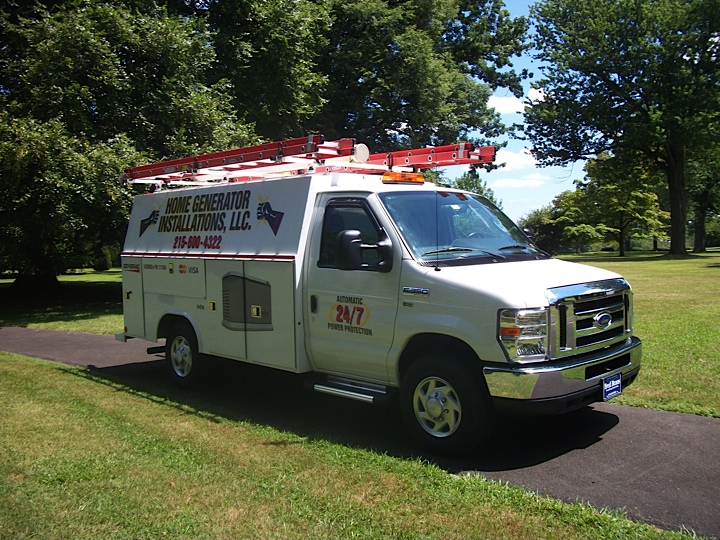
With over 39+ years in the electric and gas business, Home Generator Installations, LLC is your #1 choice for turnkey Generac whole-house standby generators, Automatic Transfer Switches, gas line sizing, and maintenance.