
Losing electricity to your house is far more than a minor inconvenience. When a summer thunderstorm or winter ice storm knocks out overhead PECO lines across Bucks or Montgomery County, central air conditioning and heating stop immediately, basement sump pumps lose power just as groundwater rises, and refrigerators and deep freezers begin warming toward spoilage temperatures. Meanwhile, cell phones and laptops drain down with no way to recharge, and home security systems fall back onto small backup batteries that only last a few hours.
A permanently installed whole-house standby generator solves all of these problems automatically. Before investing in a residential backup system, every homeowner should understand how a standby generator interacts with your main electrical panel, your Automatic Transfer Switch (ATS), and your natural gas or liquid propane supply.
How Standby Generators Work Inside Your Home's Electrical System
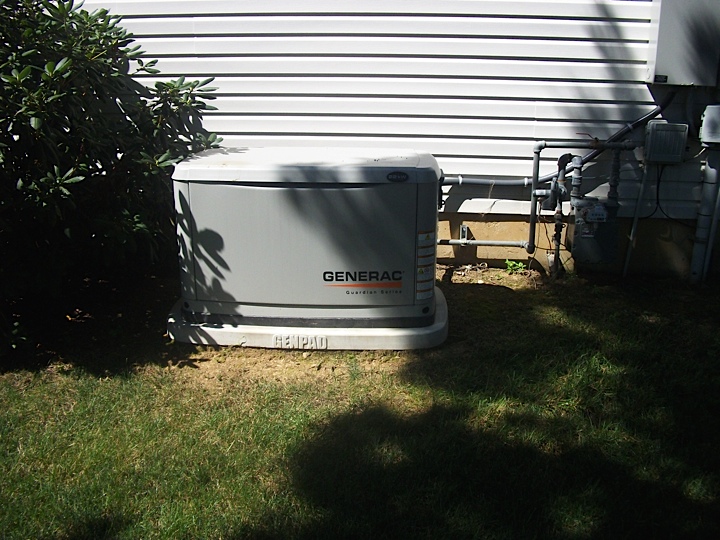
A whole-house generator—also called a permanent standby generator—is an independent electrical power plant installed outside your home, similar in appearance and footprint to a central air conditioning condenser. Unlike a small portable gasoline generator that must be wheeled out of a garage, filled with fuel cans, started with a pull cord, and connected via extension cords, an automatic standby generator is permanently hardwired into your home's electrical system and permanently piped to a continuous fuel supply (utility natural gas or an exterior liquid propane tank).
While grid electricity is flowing normally from the street utility transformer, your standby generator remains in a quiet monitoring state. Its onboard microprocessor controller continuously senses the incoming 240-volt utility line voltage inside your Automatic Transfer Switch. The moment a utility blackout or severe brownout occurs (typically when utility voltage drops below 60% to 65% of nominal 240V AC), the system executes an automated sequence:
- Outage Verification Timer (5 to 10 Seconds): Rather than cranking the engine for a half-second utility grid blink, the controller waits a few seconds to confirm the power loss is a true outage.
- Automatic Engine Start & Warm-Up: The controller opens the electronic fuel solenoid valve, positions the electronic governor mixer, and engages the 12-volt DC starter motor. Within seconds, the engine reaches its operating speed of 3,600 RPM (producing 60.0 Hz AC frequency) and builds full 120/240V voltage.
- Transfer Switch Actuation: Once voltage and frequency are stable, the Automatic Transfer Switch mechanically throws its heavy-duty double-throw contactor from the Utility position to the Generator position. This physically isolates your home from the street power lines—preventing dangerous electrical backfeeding that could injure utility lineworkers—and connects generator power to your house circuits.
- Grid Return & Automatic Cooldown: When municipal utility power returns and stays stable for roughly 15 to 60 seconds, the transfer switch automatically switches your house back to utility electricity. The generator then runs unloaded for 60 seconds to cool down internal engine components before shutting off and returning to standby readiness.
Where Are Whole-House Generators Placed and Stored?
Because a standby generator runs an internal combustion engine fueled by natural gas or liquid propane, it must always be installed outdoors in a well-ventilated location on a level concrete slab or pre-cast composite GenPad. Operating any fuel-burning generator inside a garage, basement, shed, or enclosed porch creates a lethal carbon monoxide (CO) hazard.
Under National Fire Protection Association standard NFPA 37 and local township building codes in Bucks and Montgomery Counties, our installation crew positions your generator enclosure to meet strict safety clearances:
- At least 5 feet (60 inches) from any operable window, door, dryer vent, fresh-air intake, or soffit vent opening.
- At least 18 inches from the back of the sound-attenuated UL 2200 enclosure to your home's exterior wall.
- At least 36 inches (3 feet) of unobstructed service clearance around the front and ends of the cabinet so technicians can access the battery, oil filter, spark plugs, and controller.
Are Home Standby Generators Loud?
Modern residential standby generators are substantially quieter than contractor-grade portable generators. Because portable units use open tubular frames and unbaffled mufflers running at full throttle, they frequently exceed 78 to 85 dB(A). By contrast, a Generac Guardian Series air-cooled standby generator is housed inside an acoustic-foam-lined aluminum enclosure with a baffled automotive-style muffler, operating at approximately 63 to 67 dB(A) at 23 feet under normal load—comparable to the sound of a central air conditioner or a distant lawnmower.
Furthermore, during its scheduled weekly or biweekly self-diagnostic exercise cycle (which runs for 5 to 12 minutes to circulate engine oil and keep the battery charged), Generac's Quiet-Test mode runs the engine at a reduced 2,400 RPM speed, dropping sound output to just 52 to 57 dB(A).
Technical Deep Dive: The Alternator, Rotor, Stator & Transfer Switch
Inside the generator cabinet, mechanical torque from the natural gas or propane engine spins a central shaft at 3,600 RPM (for 2-pole air-cooled units) or 1,800 RPM (for 4-pole liquid-cooled units). Attached to that shaft is the rotor, which creates a rotating magnetic field inside the stationary copper windings of the stator. Through electromagnetic induction, mechanical rotation is converted into clean 120/240-volt alternating current.
An electronic Automatic Voltage Regulator (AVR) monitors voltage waveform output in real time, holding Total Harmonic Distortion (THD) under 5% on modern Generac systems so sensitive variable-speed HVAC boards, computers, medical equipment, and kitchen electronics run smoothly.
Pre-Storm Readiness & Safety Checklist for Homeowners
Whether you already own a standby generator or are planning a new installation in Feasterville-Trevose, Newtown, Doylestown, Bensalem, Warminster, Abington, Horsham, or surrounding Pennsylvania communities, follow these core field guidelines:
- Verify Clearances Year-Round: Keep shrubs, mulch, patio furniture, and winter snow drifts at least 36 inches away from the front and sides of your generator enclosure so cooling air can flow freely.
- Never Ignore a Yellow or Red Status Light: A yellow maintenance light indicates a scheduled oil/filter interval is due; a flashing or solid red light indicates a latching fault code that prevents automatic startup during a blackout.
- Test Under Real Load Annually: A 5-minute unloaded exercise proves the engine starts, but an annual supervised transfer test verifies the Automatic Transfer Switch contactor, load-shedding relays, and dynamic gas regulator pressure under real household amperage.
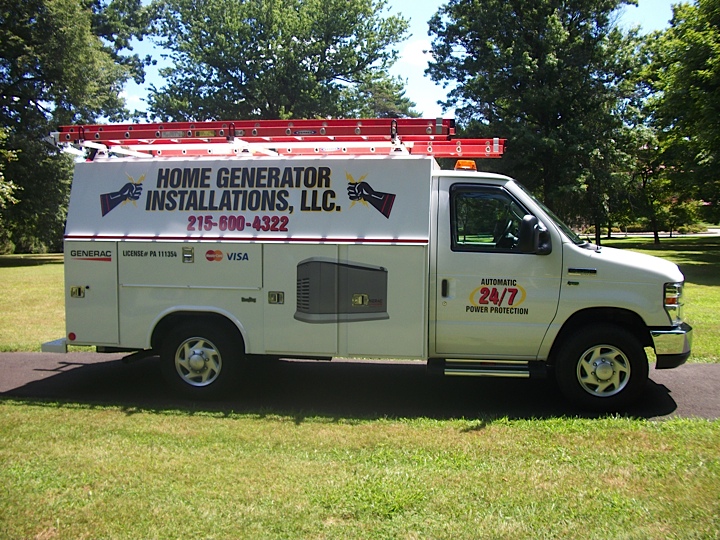
- Work With a Dual Electric & Gas Utility Specialist: Always make sure your installer is licensed in Pennsylvania (#PA 111354) and experienced in both NEC Article 702 electrical distribution and NFPA 54 gas piping.
Need Professional Generator Installation, Tuning, or Repair in Bucks or Montgomery County?
With over 39+ years in the electric and gas business, Home Generator Installations, LLC is your #1 choice for turnkey Generac whole-house standby generators, Automatic Transfer Switches, gas line sizing, and maintenance.